
The short answer
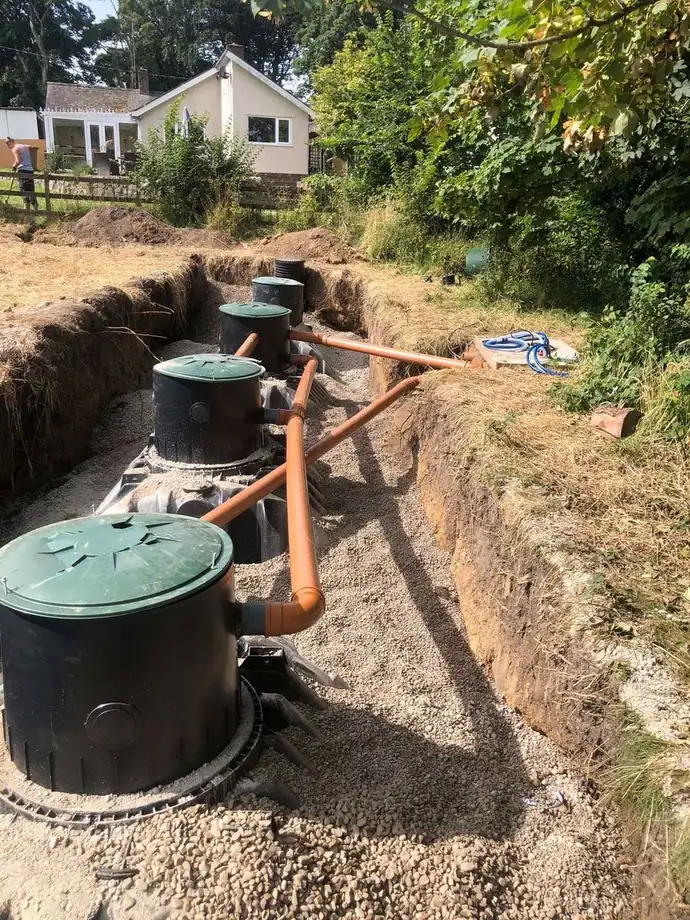
A standard septic tank has no power and nothing to switch off. It works by gravity, so when you go away it simply sits and waits. A sewage treatment plant is different. It has an air blower that should normally be left running, because switching it off lets the bacteria die back. Some plants have a holiday mode for long absences.
So the answer depends on what you have. If you are not sure, our guide to the three main types of septic system explains how to tell.
Septic tanks
A gravity septic tank has no pump, motor or electrics. Wastewater flows in, solids settle, and liquid flows out to the drainage field. When nobody is home, nothing flows and nothing needs doing.
There are two exceptions. If your system has a pump chamber to lift effluent to the drainage field, the pump and its alarm need power, so leave them switched on. And if you are going away for a long time, make sure the tank isn't overdue for emptying, so it is not left close to its limit.
Sewage treatment plants
A treatment plant relies on bacteria that need oxygen, supplied by a blower that runs all the time. Turn it off and those bacteria start to die within a day or two. The plant then behaves like a septic tank, smells, and produces much poorer effluent. When power returns, it can take weeks for the biology to recover, and in the meantime partly treated effluent reaches the drainage field or stream.
The blower costs little to run, so switching it off to save electricity is a false economy. Leave it on, even when you are away for a few weeks.
Holiday mode and long absences
Some treatment plants have a holiday or low-load setting that reduces aeration when little wastewater is coming in. It keeps the bacteria alive without over-aerating an empty plant. Check your manual to see if yours has one, and switch it back when you return.
For a property left empty for months, such as a second home out of season, ask the manufacturer or your service engineer. Some plants cope well with intermittent use, and some don't. It can help to have the plant serviced shortly before you return, so it is ready for full use.
Power cuts
Building regulations expect a powered treatment plant to cope with up to 6 hours without electricity, or to have backup power. A short cut is not a problem. After a long one, the plant may smell for a few days while it recovers. Check the blower has restarted, because some need resetting.
Turning off for good
If you are connecting to the mains sewer or replacing a system, the old tank or plant has to be decommissioned properly. The general binding rules require you to remove anything that could cause pollution, such as the sludge, when you stop using a system permanently. Usually that means emptying and cleaning the tank, then removing it or breaking it and filling it with inert material. Switch off and disconnect the power to a treatment plant safely.
What to do before you go away
- Septic tank: check it isn't due for emptying, and leave any pump chamber powered.
- Treatment plant: leave the blower on, use holiday mode if the plant has one, and make sure the power supply is not on a circuit you plan to switch off.
- Either way: tell a neighbour where the alarm panel is, if you have one.
If your treatment plant has been switched off and now smells or performs poorly, our treatment plant servicing will get it back on track, and our repairs team handles blower faults. For a septic tank with a pump, see septic tank repairs.
Decommissioning requirement from the GOV.UK general binding rules. Checked on 15 October 2026.