
The short answer
Yes. The commonest route is a drainage field so waterlogged that effluent can't soak away, which leaves the tank with nowhere to send its water. Rising groundwater can also seep into a cracked tank, and on some older homes the gutters or drive drain straight into the system.
If it only happens after prolonged rain and clears up as the ground dries, that pattern points strongly at the drainage field or groundwater.
Why wet weather causes problems
A waterlogged drainage field. A drainage field works by letting effluent seep into soil that has air in it. When the ground is already full of rainwater, the effluent has nowhere to go. It backs up through the pipes into the tank, and then into the house drains or onto the surface. Approved Document H asks for the groundwater never to rise within 1 metre of the drainage pipes for this reason, and asks designers to consider winter levels.
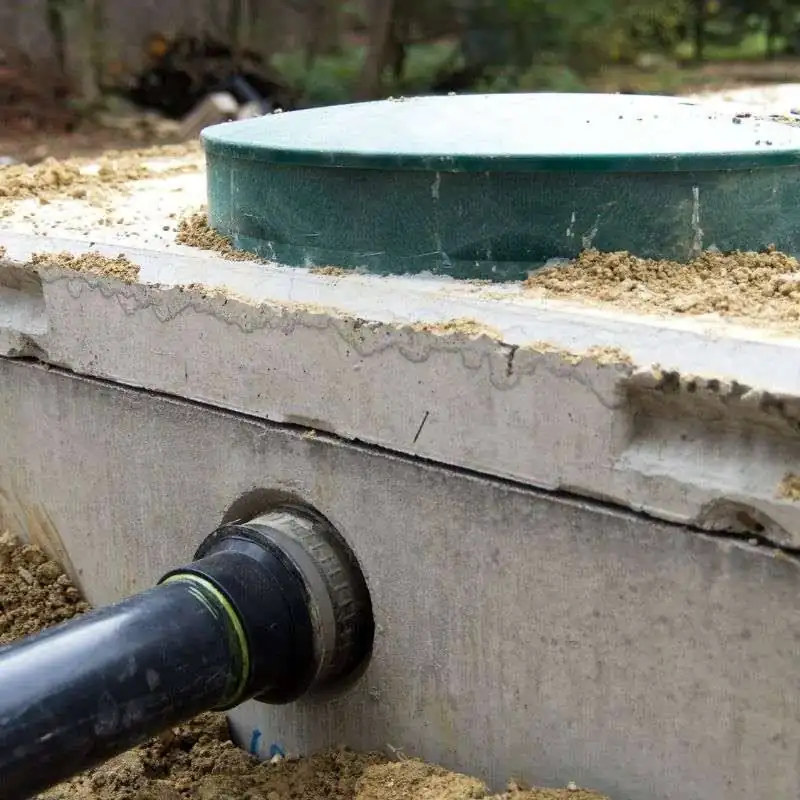
Groundwater getting into the tank. Old brick and concrete tanks often have cracks or failed joints. When the water table rises, groundwater pours in and fills the tank from outside.
Rainwater connected to the tank. Some older properties have gutters, patio gullies or drive drains running into the foul drain. Every downpour then sends hundreds of litres into the tank in a short time. Rainwater should go to a separate soakaway or watercourse, never into a septic tank.
Flooding over the tank. On low ground, surface water can flow in through lids and access points.
What to do during and after heavy rain
- Cut down on water use until the ground dries. Washing can wait.
- Keep people and pets away from any sewage on the surface.
- Keep vehicles off the drainage field, because driving on wet ground compacts the soil and makes things worse.
- If sewage is reaching a ditch or stream, report it to the Environment Agency on 0800 80 70 60.
Emptying the tank relieves the pressure for a while. In very wet ground, though, emptying a plastic tank completely can let groundwater push it upwards, so a careful contractor may refill it partly with clean water. If the groundwater itself is the problem, the tank will fill again quickly.
Lasting fixes
Disconnect any rainwater. The cheapest fix where it applies. Rainwater can go to a separate soakaway, a water butt or, where allowed, a surface water drain. We build rainwater soakaways for exactly this.
Repair the tank. Sealing cracks or replacing a tank that lets groundwater in stops it filling from outside.
Divert surface water. Where water runs onto the drainage field from higher ground, shaping the land or adding a drain to carry it around the field can help. Any new drain has to be designed so it does not pick up effluent and carry it to a ditch, and Approved Document H keeps drainage fields at least 10 metres from permeable drains.
Rebuild or rethink the drainage field. A field in ground that floods every winter will keep failing. Options include a raised mound outside a floodplain, a new field in better ground, or a sewage treatment plant discharging to a stream that flows all year. See alternatives to a drainage field.
Is it only the weather?
Sometimes rain exposes a drainage field that was already failing. If you also see wet ground or smells in dry spells, or the tank was last emptied long ago, the field may be clogged as well as wet. Our guide to the signs a drainage field is failing helps separate the two. For an overflow in any weather, see what to do when a septic tank overflows.
Our septic tank inspections check for rainwater connections, cracks and drainage field problems, and our repairs team carries out the fixes. Arrange any emptying with a registered waste carrier.