
The short answer
A working septic tank should not smell at ground level. When it does, the usual causes are a vent that is blocked or too low, a lid that no longer seals, a tank overdue for emptying, or a drainage field that has stopped soaking away. A smell indoors is more often a dried-out trap under a sink or shower than the tank itself.
Where you notice the smell tells you most about the cause, so start there.
Why septic tanks produce smells
Inside a septic tank, bacteria that live without oxygen break down the sludge. That process gives off gases, including hydrogen sulphide, the one that smells of rotten eggs. In a healthy system those gases leave through the soil vent pipe at roof height and disperse well above anyone's nose.
So a smell at ground level means gas is escaping somewhere it should not, or the system isn't working as it should.
Smell near the tank
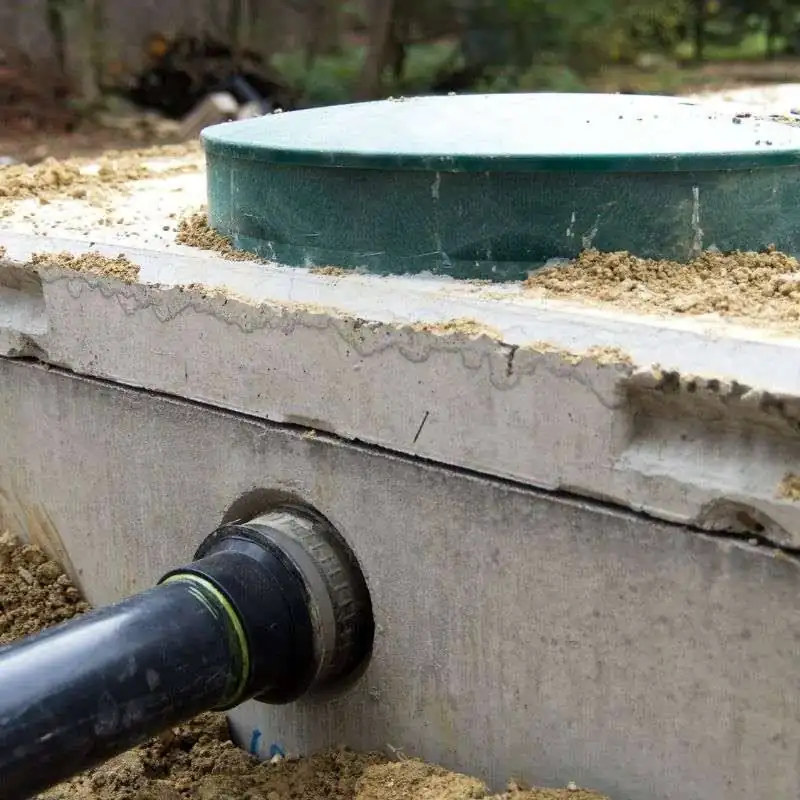
Loose or damaged lids. Covers crack and seals perish. Gas escapes around the edges, especially on still, warm days. A replacement cover is a simple fix, and building regulations now expect covers that are lockable or engineered to stop anyone getting in.
The tank needs emptying. When sludge and scum build up, the tank works less well and smells more. If it has been more than a year since it was emptied, that is the first thing to arrange.
A blocked outlet. If the outlet or dip pipe is blocked, the level rises and sewage can sit near the lid. You may also notice drains slowing in the house.
Smell around the drainage field
A smell over the drainage field, often with wet or unusually green grass, usually means effluent is not soaking away. Causes include solids clogging the trenches, groundwater sitting too high after rain, or a field that has simply reached the end of its life. Our guide to signs your drainage field is failing explains how to tell which.
Smell around the house
A dried-out trap. Every sink, shower, bath and toilet has a water seal that stops drain gas coming back into the room. In a spare bathroom that is rarely used, the water evaporates. Running the tap for a minute refills it.
A problem with the soil vent pipe. The vent should rise above the eaves and stay clear. Birds' nests, leaves and ice can block it. A vent that ends near a window, or below the roof line of a newer extension, can blow smells back towards the house. On some properties a carbon filter fitted to the vent helps.
A failed seal. A cracked toilet pan seal or a loose access cap on an internal drain can let gas into the house.
Smell from a treatment plant
A sewage treatment plant relies on air to keep its bacteria working. If the blower stops, the plant turns septic and starts to smell, often within days. Listen for the hum. If it has gone quiet, check the power before calling an engineer. Our guide to common treatment plant problems covers the other causes.
What makes smells worse
- Large amounts of bleach, disinfectant or drain cleaner, which can upset the bacteria.
- Rainwater from gutters or drives connected to the tank.
- Fat and cooking oil, which build up as scum.
- Long periods of heavy water use, such as a full house over a holiday.
Is the smell dangerous?
The faint smell you might catch near a vent isn't a health risk outdoors. Inside a tank or chamber it is different. Hydrogen sulphide builds up in enclosed spaces, and at high levels it numbs your sense of smell, so you stop noticing it just as it becomes dangerous. Never lean into an open tank and never climb into one. Our page on septic tank gas has the detail.
What not to do
Masking the smell with perfumes or bacterial additives does not fix the cause. Neither does sealing the vent, which can force gas back through the traps into the house.
If you cannot pin down where the smell is coming from, a septic tank inspection will find it. We carry out the repairs too, from new covers and vent work to drainage field rebuilds.