
The short answer
A well-built septic tank that is emptied every year can last for several decades, and many brick and concrete tanks still work after fifty years or more. The drainage field usually gives out first. How long a system lasts depends far more on installation, emptying and what goes down the drains than on the age printed on any paperwork.
There is no official lifespan for a septic tank, and no rule that says one must be replaced after a set number of years. Condition is what counts.
The tank
The tank is the most durable part. Concrete and brick tanks can go on for a very long time, though their walls slowly corrode above the waterline and their internal baffles can fail. Factory-made GRP and polyethylene tanks don't corrode, and when they fail early it is usually because they were badly bedded or backfilled, or lifted by groundwater.
Smaller parts wear sooner. Dip pipes and T-pieces can break or come loose, and access covers crack. These are cheap to replace compared with the tank itself, and replacing them extends its life.
The drainage field
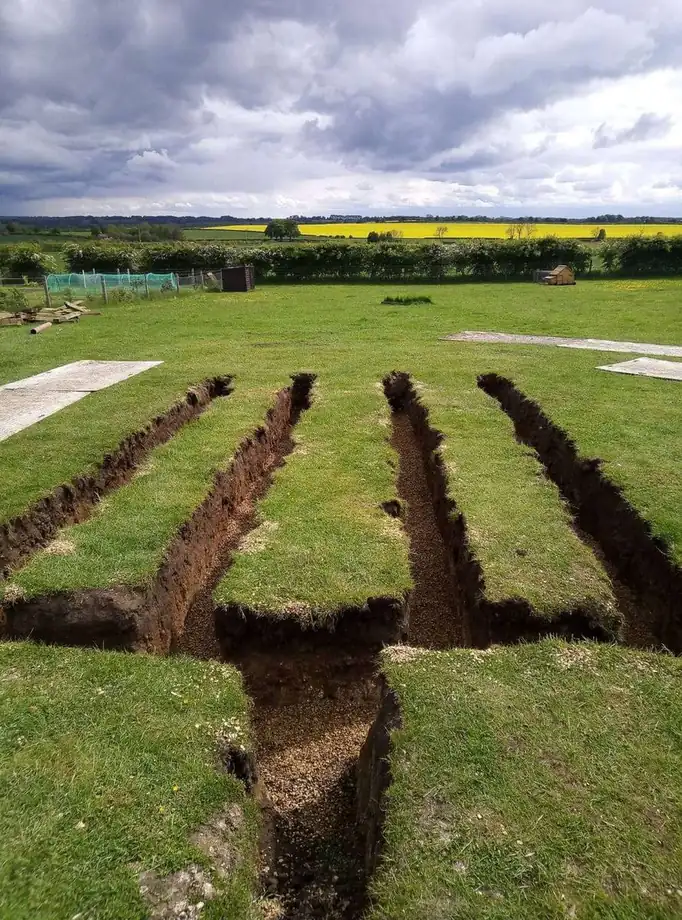
This is the part most likely to fail. Over time a layer of organic matter builds up where effluent meets the soil, and if solids keep escaping from the tank, that layer thickens until water can no longer soak away. Waterlogged ground, tree roots and heavy vehicles driven over the field all shorten its life.
A drainage field on good ground, fed by a tank that is emptied every year, can last for decades. One fed by an overfull tank can clog in a fraction of that time. Our guide to signs a drainage field is failing lists what to watch for.
Treatment plants
A sewage treatment plant has moving parts. The tank lasts a long time, but the air blower needs routine replacement of its diaphragms, which suppliers commonly put at every one to three years, and the blower itself will eventually need replacing. Regular servicing catches this before the plant stops treating.
What shortens a system's life
- Skipping emptying, so sludge and scum wash into the drainage field.
- Rainwater from gutters or drive drains connected to the tank.
- Wet wipes, sanitary products and cooking fat.
- Driving or parking over the tank or drainage field.
- A household that has grown beyond what the tank was sized for.
- Trees planted close to the drainage field.
Signs a system is near the end
Look out for a tank that fills fast after emptying, or one whose liquid level sits below the outlet, which suggests a leak. Cracked or crumbling concrete around the lid is another warning. In the garden, the signs are wet, smelly ground over the drainage field and drains that back up after rain.
Not every one of these means replacement. A blocked outlet or a broken dip pipe is a repair. A drainage field that has clogged after years of overflowing solids usually needs rebuilding, and a tank with major structural cracks normally needs replacing.
Making a septic tank last
Empty it at least once a year, or as the manufacturer advises, which is also what the general binding rules require. Keep rainwater out, mind what goes down the drains, and keep vehicles and trees away from the drainage field. Have it inspected if anything changes, such as a new smell, a wet patch or slow drains. Our septic tank maintenance dos and don'ts has the detail.
If you want to know how much life your system has left, our septic tank inspections look at the tank and the drainage field. Where repairs will extend its life, our repairs team can carry them out, and where it has reached the end, we install replacement systems.