
The short answer
Most septic tanks are buried in the garden, downhill from the house and somewhere between a few metres and a few tens of metres away. To find yours, follow the main drain out of the house, look for inspection covers and lids, and check any paperwork from when you bought the property. If that fails, a drainage engineer can trace it with a camera or a locator.
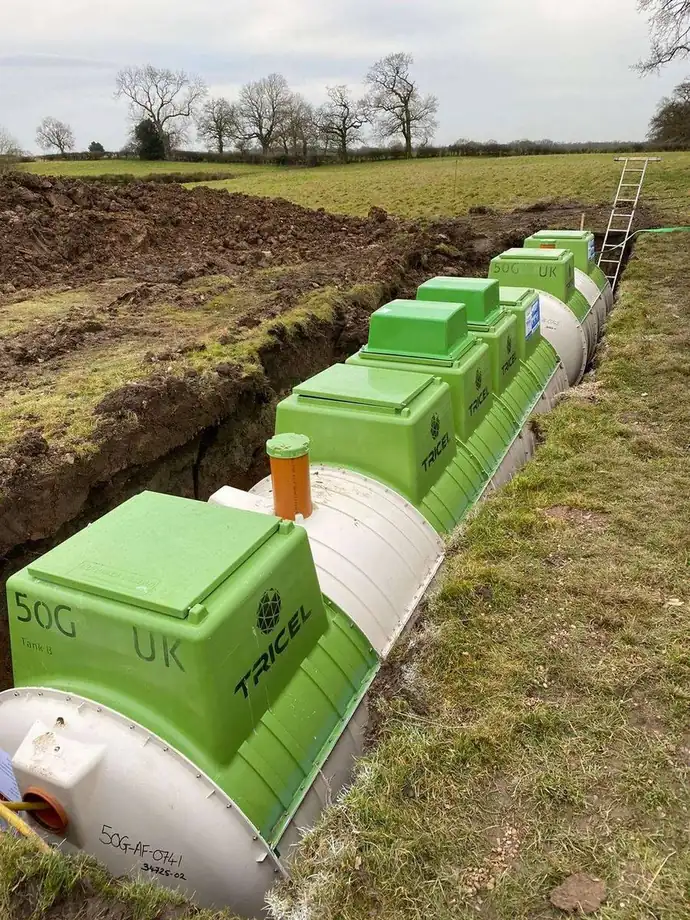
It is surprising how often owners don't know where their tank is, especially after a garden has been landscaped or a previous owner left no records.
Start with the paperwork
Look through the documents you have before going outside.
- The seller's property information form, or any drainage report from your purchase.
- Building control records for the house or for a replacement tank. Your council may hold a completion certificate with a plan.
- Old emptying receipts, which sometimes note the location.
- Planning drawings for extensions, which often show the drainage.
Anyone selling a property with a septic tank in England has to give the buyer written details of the system, including where its main parts are. If you bought recently, that information may already be in your conveyancing file.
Follow the drain from the house
The waste pipe usually leaves the house on the side where the bathroom and kitchen are. Find the soil vent pipe, the large pipe running up the outside wall or through the roof, and look at the ground below it.
Inspection chambers, the small square or round covers in a path or lawn, mark where the drain runs. Lift one carefully and see which way the pipe leaves it. Follow that direction across the garden, looking for the next cover.
Clues in the garden
- A large lid or pair of lids, often concrete or green plastic, sometimes hidden under turf or gravel.
- A level area that does not match the rest of the garden.
- Grass that grows greener or faster in one patch, often over the drainage field rather than the tank.
- A firm track or gap in a hedge where a tanker has been reaching the tank.
- Snow that melts sooner over one spot in winter.
Building regulations ask for a new tank to be at least 7 metres from habitable parts of the house and within 30 metres of where a tanker can park, so that band of the garden is a good place to look. Older tanks may not follow these distances.
Probing safely
If you think you know roughly where it is, a thin metal rod pushed gently into the soil can find a hard lid. Go carefully, because plastic tanks and pipes can be damaged, and never dig near buried electric cables. If you find a lid, don't open it and lean in. Septic tanks give off gases that can be dangerous, and nobody should ever climb into one.
When to call someone in
If the paperwork and the garden give you nothing, a drainage engineer can push a camera along the drain from an inspection chamber and track a sonde, a small transmitter on the camera head, from above. That finds the tank and shows the condition of the pipe on the way.
Finding the drainage field
The drainage field is often harder to find than the tank. It usually lies downhill of the tank. In dry weather the grass over its trenches can show as green stripes. An inspection chamber between the tank and the drainage field, which building regulations ask for on newer systems, is a useful marker.
Once you have found everything, draw a simple plan with measurements from fixed points such as the corner of the house. Keep it with your records, because you will need it when you sell.
If you cannot find your tank, or you have found it and want to know what condition it is in, our septic tank inspections will locate and check the whole system. For buyers, our home buyer drainage survey does the same before you commit. See also how deep is a septic tank and septic tank gas for the safety side.