
The short answer
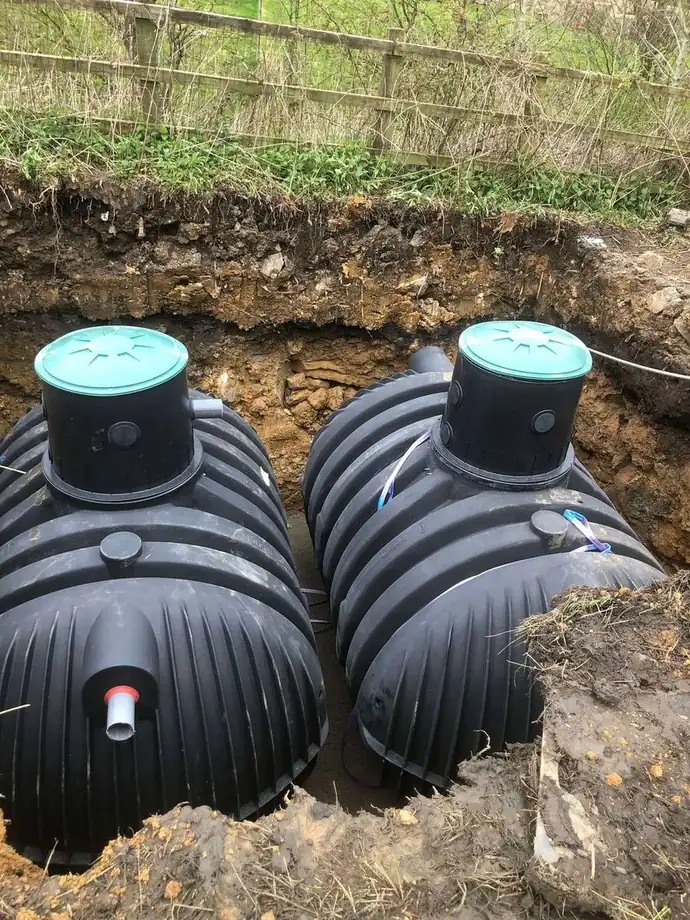
In the UK, a biodigester septic tank is a sewage treatment plant. The name is used by suppliers for packaged units that pump air through wastewater so bacteria can break it down, giving much cleaner effluent than a septic tank. It needs electricity and servicing, and it can discharge to ground or to a stream that flows all year.
The word causes confusion because it means something else in other countries. If you have been reading about digesters that make cooking gas from farm waste, that is a different technology and not something a UK home uses for its drainage.
Two meanings of biodigester
In UK drainage sales, a biodigester is an aerobic treatment plant. Oxygen is the whole point, because the bacteria that clean the water need it.
Elsewhere in the world, especially in agriculture, a biodigester often means an anaerobic digester. It breaks down manure or food waste in a sealed vessel with no oxygen and captures the methane as biogas. That is useful on farms and in some developing regions, but it doesn't produce effluent fit to discharge, and it is not a substitute for a septic tank or treatment plant at a UK house.
The rest of this page uses the UK meaning.
How a biodigester treatment plant works
Wastewater settles in a first chamber, where solids drop out. The liquid then passes to an aeration chamber, where a blower supplies air and bacteria growing on plastic media digest the dissolved waste. A final chamber lets the last particles settle before clean effluent leaves. Our guide to what a sewage treatment plant is describes the stages and the different designs.
How it differs from a septic tank
| Septic tank | Biodigester (treatment plant) | |
|---|---|---|
| Treatment | Settlement only; the soil does the rest | Settlement plus aeration inside the unit |
| Effluent | Still heavily polluted | Much cleaner |
| Can discharge to a stream | No | Yes, if it meets the rules |
| Power | None | Blower runs constantly |
| Upkeep | Emptying at least yearly | Servicing and desludging as the manufacturer advises |
When a biodigester makes sense
The usual reasons to choose one are a septic tank that currently discharges to a ditch or stream, ground that drains too poorly for a full septic tank drainage field, or a small plot. It is also a common choice for barn conversions and new rural homes. On good ground with plenty of space, a septic tank remains the cheaper option, which we weigh up in septic tank or sewage treatment plant.
The rules in England
A biodigester is treated exactly like any other small treatment plant. It must meet BS EN 12566-3 if new, and it can discharge under the general binding rules without a permit if the volume is no more than 2 cubic metres a day to ground or 5 to surface water and the other conditions are met. It needs building regulations approval, and Approved Document H expects a powered plant to manage up to 6 hours without electricity or to have backup power.
Looking after one
The blower is the part to keep an eye on. Listen for its hum every so often, because a silent plant has stopped treating. Servicing, normally at least once a year, is when an engineer checks the blower and diffusers along with the sludge level and the effluent, and desludging should follow whatever interval the manufacturer gives.
Between visits, the same habits as a septic tank apply. Keep wet wipes, fat and rainwater out, and go easy on bleach and drain cleaners, which can knock back the bacteria. Switching the plant off to save electricity is a false economy, because the bacteria die without air. Our page on common treatment plant problems explains what to check if something seems wrong.
What does one cost?
As a guide, 2026 price surveys put a domestic treatment plant supplied and installed at roughly £6,000 to £9,500 for a house of up to five people, rising for bigger households and awkward sites. The drainage field or pipe run to a stream is often the part that moves the price most.
We install, service and repair biodigester treatment plants. See sewage treatment plant installation, or our servicing page if you already have one.
Checked against the GOV.UK general binding rules on 15 October 2026.