
The short answer
For most people, living next to a sewage treatment plant is safe. The main problem near a large water company works is smell, which can affect quality of life and which councils can act on as a statutory nuisance. Research into airborne bacteria near big works continues, and the risk is still being studied. A small domestic plant serving a house, working properly, should cause neither.
It helps to separate the two kinds of plant, because the concerns are very different.
Large sewage works
Water companies run sewage treatment works serving towns and villages. They handle huge volumes, often with open tanks, sludge treatment and storage, and they can produce strong smells, particularly in warm weather or when sludge is being moved.
Smell
Odour is the complaint most residents have. Beyond being unpleasant, persistent bad smells are linked by some residents to headaches, nausea and disturbed sleep, and they affect how people use their homes and gardens. GOV.UK lists sewage treatment works among the sources councils deal with under statutory nuisance law. A smell counts as a statutory nuisance if it unreasonably and substantially interferes with the use or enjoyment of a home, or harms health or is likely to.
Airborne bacteria
Sewage works release bioaerosols, tiny airborne particles that can carry bacteria and other microbes. A 2022 scientific review concluded they may pose health risks to sewage workers and nearby residents, while noting significant gaps in the evidence about how much exposure people actually get. So far it is treated as a recognised concern, and evidence of actual harm to people living nearby is limited.
Flies, noise and traffic
Some works attract flies in summer, and tanker traffic and machinery can add noise. These are usually smaller issues than smell.
What to do about a smell from a works
- Keep a diary of when the smell happens, how strong it is and how it affects you. Councils often ask for one.
- Report it to the water company that runs the works, as they may not know there is a problem.
- If it continues, complain to your council's environmental health team. Under the GOV.UK guidance on nuisance smells, councils must look into complaints about smells from business premises and can serve an abatement notice.
- For pollution of a river or stream from the works, contact the Environment Agency on 0800 80 70 60.
Buying a house near a sewage works
Visit at different times of day, including a warm evening, and ask neighbours how often they notice it. You can ask the council whether it has received odour complaints about the works. Wind direction makes a big difference, so check which way the prevailing wind blows between the works and the house.
Small domestic treatment plants
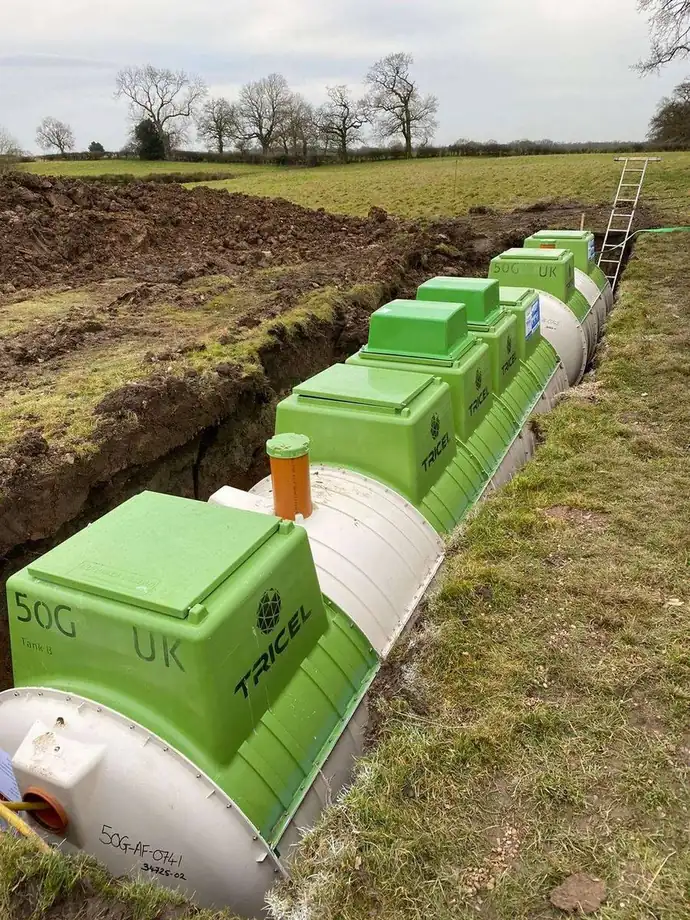
A domestic sewage treatment plant serving one house, or a few, is a different thing entirely. It is a sealed unit, usually buried, treating a household's wastewater with air and bacteria. Working properly, it should not smell beyond the odd faint whiff when the lid is lifted, and the blower makes a low hum.
Building regulations ask for the discharge from a domestic plant to be sited at least 10 metres from other buildings. Problems with a neighbour's plant almost always come from a fault, such as a failed blower, which turns it septic and smelly within days, or overdue desludging. Our guides to common treatment plant problems and treatment plant noise explain the usual causes.
Is it safe to have one in your own garden?
Yes, with sensible precautions. Keep lids secure and children away from access points, never climb into a chamber, and have the plant serviced as the manufacturer recommends. Our page on what a sewage treatment plant is covers how they work.
If a domestic plant near you smells or is noisy, it usually has a fault that can be put right. We service and repair domestic plants, so see our treatment plant servicing and repairs pages. We don't work on water company sewage works.