
The short answer
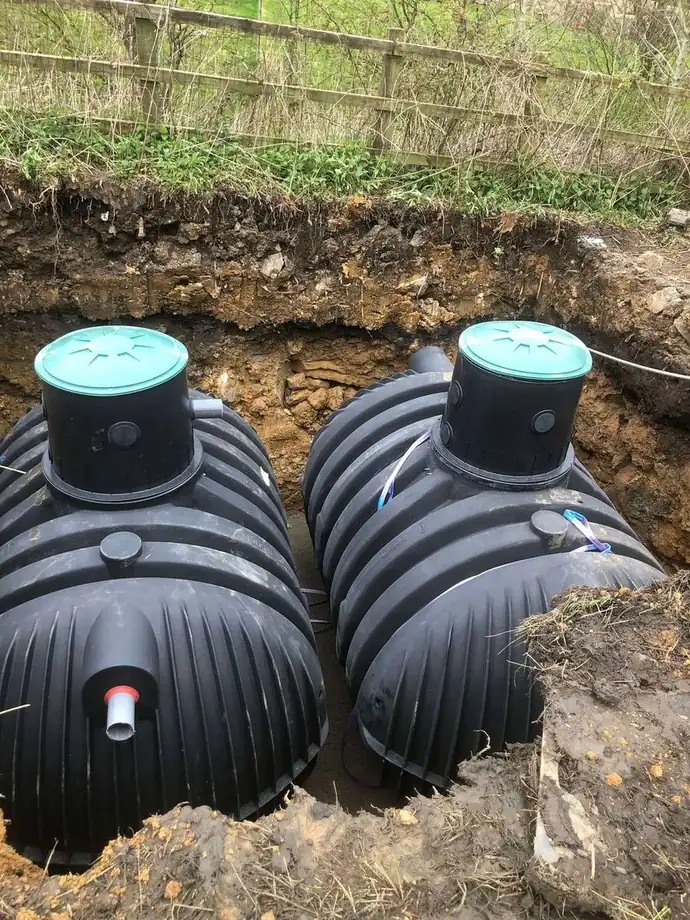
A concrete septic tank is either cast in place on site or made from precast concrete sections. They are heavy, strong and common on older properties. Modern factory tanks are more often glass reinforced plastic (GRP) or polyethylene, which are lighter, watertight from the factory and quicker to install. Either kind can work well if it is built properly and emptied every year.
If you own an older house with private drainage, there is a good chance the tank is concrete or brick. Knowing what to look for helps you decide whether it needs work.
Types of concrete tank
Cast in situ. Built on site, with concrete poured into shuttering and internal walls forming the chambers. Approved Document H allows this, with walls at least 150 mm thick and the tank made watertight. Many tanks from the middle of the last century were built this way, sometimes with brick walls instead.
Precast rings or sections. Concrete rings stacked in an excavation, sealed at the joints. Quicker than pouring, but the joints are the weak point.
Factory precast tanks. One-piece or sectional concrete units made to BS EN 12566-1, the same standard as plastic tanks.
Concrete compared with plastic and GRP
| Concrete | GRP or polyethylene | |
|---|---|---|
| Weight | Very heavy, needs a crane or built in place | Light, easier to get onto tight sites |
| High water table | Weight resists flotation | Must be anchored, usually with a concrete backfill |
| Watertightness | Depends on workmanship and joints | Watertight from the factory |
| Corrosion | Can be attacked by acidic gases above the liquid line | Does not corrode |
| Typical age found today | Often decades old | Most installed in the last 30 years or so |
Neither material is better in every case. Plastic tanks have a reputation in some quarters for short lives, but a properly installed and backfilled GRP or polyethylene tank to the British Standard should last a long time. Most early failures come from poor installation rather than the material.
Common faults in old concrete tanks
Cracks and leaks. Ground movement, tree roots and age all crack concrete. A leaking tank lets untreated sewage into the ground and lets groundwater in, which can flood the tank.
Corrosion above the waterline. Hydrogen sulphide given off by the sewage forms acid on damp concrete surfaces above the liquid. Over many years this eats into the walls, the roof slab and the internal baffle walls.
Failed baffles and dip pipes. The internal walls or T-pieces that keep scum and sludge in the tank can break or fall off. Solids then wash straight to the drainage field.
Root intrusion. Roots find their way through joints and cracks, especially in sectional tanks.
Cover slabs. Old concrete lids crack and become unsafe. Building regulations now expect access covers that are lockable or engineered to stop anyone getting in.
Repair or replace?
Cracks, damaged baffles and broken covers can often be repaired, and a sound old tank can carry on for years. The tank does not have to meet a British Standard if it was installed before 1983, as we explain in pre-1983 septic tank rules.
Replacement makes more sense when the structure is badly corroded or cracked in several places, when the tank is too small for the household, or when it discharges to a watercourse. In those cases a new factory tank or a treatment plant usually costs less over its life than repeated repairs. The old tank should be emptied, cleaned and either removed or broken and filled.
Signs your concrete tank needs looking at
- The liquid level is below the outlet, which suggests a leak.
- The level is high and the tank fills quickly after emptying, which points to groundwater getting in.
- Crumbling concrete or exposed reinforcement is visible around the lid.
- Solids are reaching the drainage field, with wet ground or smells to show for it.
Our septic tank inspections assess the structure of concrete and brick tanks, and our septic tank repairs cover cracks, baffles and covers. Where replacement is the better answer, we handle the installation.