
The short answer
Sewage treatment plant effluent is the treated water that leaves the final chamber of the plant. From a healthy plant it should be fairly clear, perhaps slightly cloudy, with little smell. Grey, murky or smelly effluent, or effluent carrying solids, means the plant isn't treating properly and needs looking at.
The quality matters because this water goes straight to a drainage field or a stream. A struggling plant pollutes quietly long before anything backs up in the house.
How a plant cleans the water
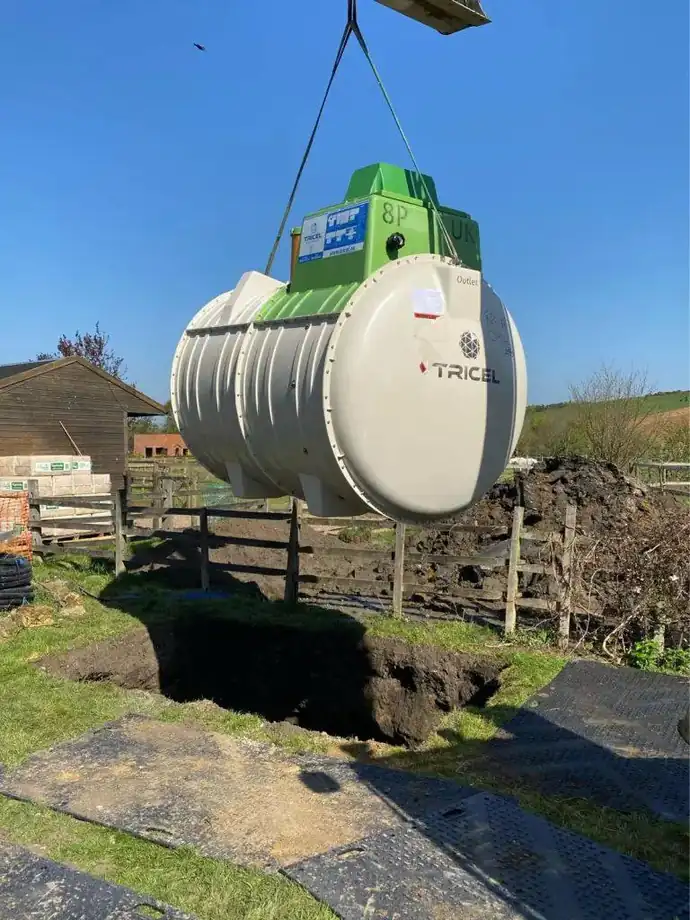
Wastewater settles in a first chamber, where solids drop out as sludge. The liquid moves on to a treatment stage where air is pumped in, and the bacteria living there break down the dissolved waste. A final settlement chamber lets the remaining particles sink before the clear water leaves. Our guide to what a sewage treatment plant is explains the stages in more detail.
The figures you will see quoted
Effluent quality is usually described with three measurements.
- Biochemical oxygen demand (BOD) is how much oxygen bacteria would use breaking down what is left in the water. Lower is cleaner.
- Suspended solids (SS) are the particles still floating in it.
- Ammoniacal nitrogen comes mainly from urine and is toxic to fish.
You will often see a plant described as producing 20:30 effluent, or 20:30:20 with ammonia added. The 20:30 part goes back to the Royal Commission on Sewage Disposal in 1912, which suggested 20 mg/l of BOD and 30 mg/l of suspended solids as a benchmark for discharges to rivers. Many manufacturers still quote their results against it.
Is there a legal limit for a home?
Not as a number, under the general binding rules. A homeowner in England is not asked to test their effluent. The rules instead require the plant to meet the relevant British Standard, which for modern plants is BS EN 12566-3, to be maintained and to not cause pollution. Plants are tested to that standard and the results appear in the manufacturer's documents, so compare those figures if you are choosing a model.
Numeric limits come in with a permit. A permit, whether bespoke or one of the 2026 standard rules permits, can set conditions on the effluent, and the operator must keep to them.
What good and bad effluent look like
| Healthy plant | Plant with a problem |
|---|---|
| Clear or slightly hazy water | Grey, black or milky water |
| Little or no smell | A sewage or rotten-egg smell |
| No visible solids | Sludge, paper or fibres in the outlet |
| Steady, quiet hum from the blower | No hum at all, or a loud rattle |
Foam on the surface of the treatment chamber, grey slime building up in the outlet and a drainage field that stays wet are all worth acting on.
What causes poor effluent?
The most common cause is a failed or weak air blower. Without air the bacteria die back and the plant behaves like a septic tank. Close behind come overdue desludging, which lets solids carry over into the final chamber, and things going down the drains that harm the bacteria. Large doses of bleach, disinfectant, fat and medicines are the usual culprits. Rainwater getting into the system dilutes it, and long periods with the power off let the biology fade.
Underloading can cause trouble too. A plant sized for a family that is used by one person, or left empty for weeks, may not keep a healthy population of bacteria.
Keeping effluent quality up
Have the plant serviced in line with the manufacturer's instructions, which for most models means at least once a year, and desludged as the manufacturer recommends. Keep the blower running. Listen for it every so often, because it is the part that fails most. Our common sewage treatment plant problems guide explains what to check yourself before calling someone.
Our sewage treatment plant servicing includes checking the effluent at the outlet, and if the plant is failing, our repairs team can find out why.
Checked against the GOV.UK general binding rules on 15 October 2026.